
Essay on Pollution for Students (Air, Water, Soil and Noise)
Smoggy mornings, plastic-choked drains and blaring horns make this essay on pollution page useful for almost every class. Here you get two sets of 10 lines, a paragraph on pollution, short essays of 100 and 150 words, an essay on pollution in 250 words, separate pieces on air, water, soil and noise pollution, a long environmental pollution essay of 500 words and a speech on pollution for the school assembly.
Each piece carries a class tag, so start with the one closest to your syllabus and word count. Read it twice, mark the causes, effects and solutions separately, and rewrite it using examples from your own town. A Hindi version of this topic is on our Pradushan par nibandh page.
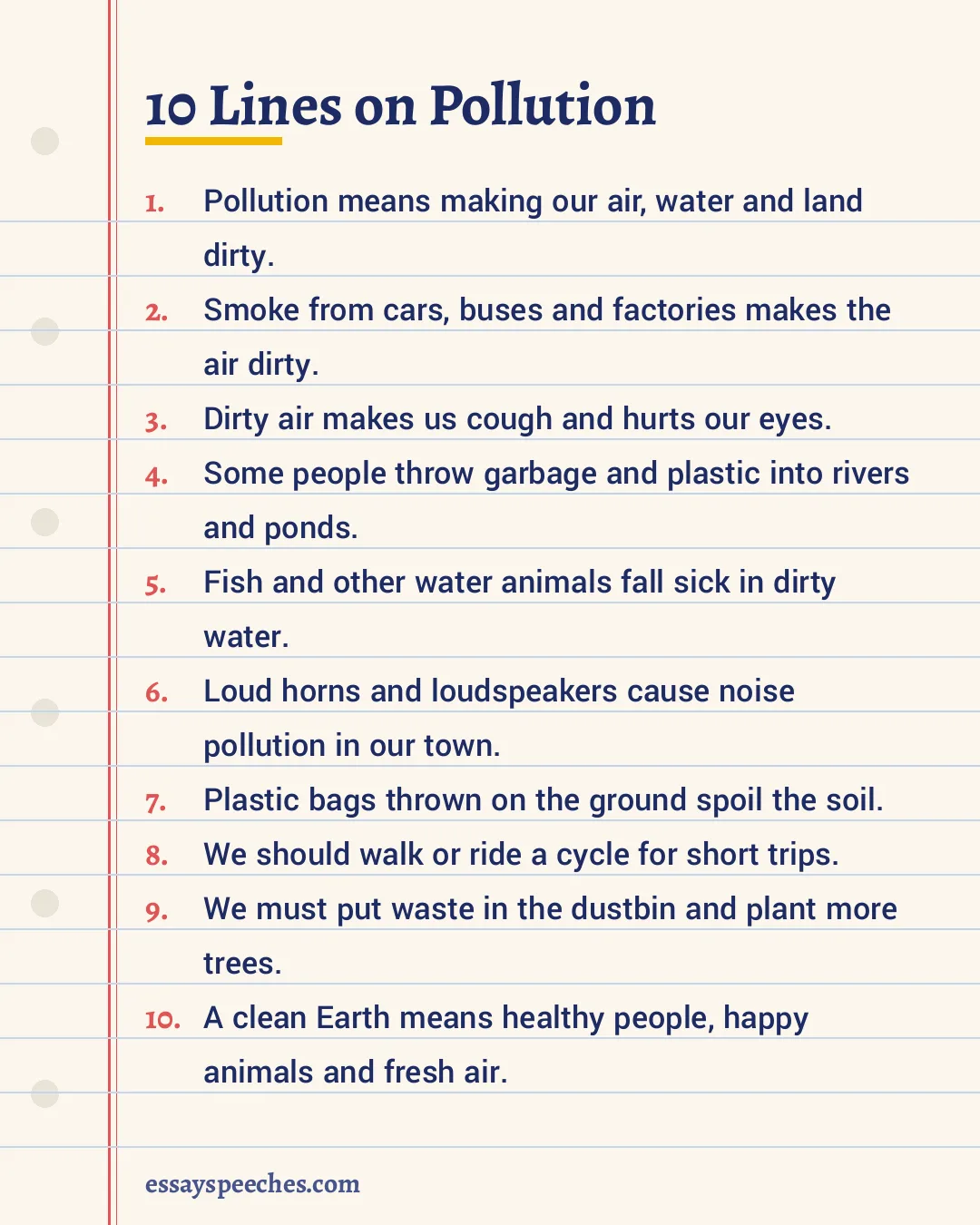
10 Lines on Pollution
- Pollution means making our air, water and land dirty.
- Smoke from cars, buses and factories makes the air dirty.
- Dirty air makes us cough and hurts our eyes.
- Some people throw garbage and plastic into rivers and ponds.
- Fish and other water animals fall sick in dirty water.
- Loud horns and loudspeakers cause noise pollution in our town.
- Plastic bags thrown on the ground spoil the soil.
- We should walk or ride a cycle for short trips.
- We must put waste in the dustbin and plant more trees.
- A clean Earth means healthy people, happy animals and fresh air.
10 Lines on Pollution for Class 5 (Set 2)
- Pollution is the mixing of harmful substances into the air, water, soil and our surroundings.
- The four main types of pollution are air, water, soil and noise pollution.
- Vehicles, factories, burning garbage and burning crop stubble fill the air with smoke and dust.
- Sewage and chemical waste flowing into rivers make the water unfit to drink.
- Too much use of chemical fertilisers and pesticides slowly poisons the soil.
- Plastic does not rot for hundreds of years and chokes drains, fields and seas.
- Noise from traffic, construction work and loudspeakers can cause headaches, stress and hearing loss.
- Polluted air leads to asthma and lung diseases, especially in children and old people.
- Using public transport, saving electricity and carrying cloth bags can reduce pollution.
- Every student can become a friend of nature by keeping the classroom and the street clean.
Short Essay on Pollution in English (100 Words)
Look around a busy road and you will see black smoke, piles of garbage and plastic bags flying in the wind. This is pollution. It happens when harmful things get mixed with the air we breathe, the water we drink and the soil that grows our food.
Pollution makes people sick. Dirty air causes coughing and breathing trouble. Dirty water spreads diseases like cholera and typhoid. Loud noise disturbs our sleep and our studies.
We can fight pollution in small ways. We should switch off lights, use dustbins, carry cloth bags and plant trees. A clean Earth begins with clean habits.
Pollution Essay in English 150 Words
Our environment gives us clean air, fresh water and fertile soil, but human activities are spoiling all three. When harmful substances called pollutants enter nature and damage it, we call it environmental pollution.
There are four main kinds. Air pollution comes from vehicle exhaust, factory chimneys and burning waste. Water pollution is caused when sewage, chemicals and plastic are dumped into rivers, lakes and seas. Soil pollution happens because of chemical fertilisers, pesticides and heaps of garbage. Noise pollution comes from traffic, loudspeakers and machines.
The effects are serious. People suffer from asthma, stomach infections, skin problems and hearing loss. Birds, fish and animals lose their homes and food. Polluted air also adds to global warming.
The solution lies with each of us. We can plant trees, use public transport, separate wet and dry waste and say no to plastic bags. Small steps taken by millions of people can make India clean and green again.
Paragraph on Pollution
Nature has its own way of cleaning itself. Rain washes the air, rivers carry away dirt and tiny organisms in the soil break down dead leaves. Pollution begins when we produce waste faster than nature can handle it. Smoke from millions of vehicles, untreated sewage, plastic that never rots and the endless honking of horns are all signs of this problem. The result is poor health, dying rivers and tired, stressed people. The answer is not difficult. If every family uses less plastic, saves power, keeps its surroundings clean and plants a tree, nature can heal itself once more.
Essay on Pollution in 250 Words (Types of Pollution)
Pollution is the presence of harmful substances in the environment that make it unsafe for living beings. It has grown along with cities, factories and the number of vehicles on our roads. Scientists usually divide it into four main types.
Air pollution is the most visible. Exhaust from vehicles, smoke from factories and power plants, dust from construction and the burning of crop stubble and garbage fill the air with harmful gases and fine particles. In winter, many north Indian cities are covered with thick smog for days.
Water pollution takes place when sewage, factory chemicals and household waste are poured into rivers and lakes. Such water spreads diseases like cholera, typhoid and jaundice and kills fish and other aquatic life.
Soil pollution is caused by the heavy use of chemical fertilisers and pesticides, and by plastic and industrial waste dumped on land. Polluted soil slowly loses its fertility, and the harmful chemicals can enter the food we eat.
Noise pollution is unwanted, loud sound from traffic, loudspeakers, firecrackers and machines. It causes stress, headaches, sleeplessness and even permanent hearing loss.
All four types can be reduced if we act together. Factories must treat their waste, farmers can use organic manure, and citizens can use public transport, avoid single-use plastic and keep the volume low. Clean surroundings are not a gift from someone else. They are the result of our own daily choices.
Air Pollution Essay 100 Words
We can live for weeks without food, but not even a few minutes without air. Sadly, the air in many Indian towns is no longer clean. Smoke from cars, trucks and factories, dust from building sites and the burning of garbage and crop stubble release harmful gases and tiny particles.
Breathing such air causes coughing, burning eyes, asthma and lung disease. It also harms plants and adds to global warming.
We can reduce air pollution by walking or cycling for short distances, sharing rides, keeping vehicles in good condition and planting trees. Clean air is a right of every living being.
Water Pollution Paragraph (Essay on Water Pollution)
Rivers have always been the lifeline of Indian villages and cities, yet many of them now carry more waste than water. Water pollution happens when untreated sewage, factory chemicals, plastic, and fertilisers washed from fields enter rivers, lakes, ponds and the sea. People who drink or bathe in such water can fall ill with cholera, typhoid, diarrhoea and skin infections. Fish die, and harmful algae spread over still water. To protect our water, towns must treat sewage before releasing it, factories must clean their waste, and families should never throw garbage or plastic into any water body.
Soil Pollution Essay in Short (100 Words)
Soil is the thin, living layer of the Earth that grows almost all our food. Soil pollution happens when harmful chemicals and waste spoil this layer. The main causes are too much chemical fertiliser and pesticide, plastic bags and bottles that do not rot, open garbage dumps and waste from mines and factories. Polluted soil becomes less fertile, earthworms and useful microbes die, and poisons can travel into crops and groundwater. Farmers can protect the soil with compost, crop rotation and natural pest control. At home, we can separate waste, make compost from kitchen scraps and avoid plastic.
Noise Pollution Paragraph
Noise pollution is the kind of pollution we hear rather than see. Sound is measured in decibels, and when it becomes too loud or goes on for too long, it harms our body and mind. Constant honking, loudspeakers at late hours, firecrackers, generators, aeroplanes and construction machines are its main sources. Too much noise causes headaches, high blood pressure, poor sleep and loss of hearing. It makes it hard for students to study and frightens birds and pets. We can reduce it by honking only when needed, keeping music low and respecting quiet zones near schools and hospitals.
Long Environmental Pollution Essay (500 Words)
Introduction
A child in a big Indian city today may grow up without ever seeing a clear starry sky or swimming in a clean river. That is the quiet cost of environmental pollution. Pollution is any unwanted change in the air, water or land that harms human beings, animals and plants. The substances that cause it are called pollutants, and they include gases, chemicals, plastic, waste and even sound and heat.
Causes of Pollution
The biggest cause is the rapid growth of industry and cities without proper planning. Factories release smoke into the air and chemical waste into rivers. The number of vehicles on our roads keeps rising, and each one adds exhaust gases. In many places, garbage is burnt in the open, and in parts of north India farmers burn crop stubble after the harvest, which covers whole regions with smoke.
Our daily habits add to the problem. We use plastic bags for a few minutes and throw them away, though they last for centuries. Sewage from towns often flows untreated into rivers. Farmers, hoping for bigger harvests, use more chemical fertilisers and pesticides than the soil needs. Loudspeakers, horns and firecrackers fill our streets with noise.
Effects on Health and Nature
Polluted air causes asthma, bronchitis, heart disease and lung cancer. Dirty water spreads cholera, typhoid and jaundice, and it is still one of the main reasons for illness among young children. Poisonous chemicals in the soil enter the food chain through crops, and noise raises stress and blood pressure.
Nature suffers just as much. Fish die in rivers that have little oxygen left, birds swallow plastic, and forests near mines and factories turn grey. Gases such as carbon dioxide trap heat and cause global warming, which brings stronger heat waves, uneven rainfall and melting glaciers. The Bhopal gas tragedy of 1984, when a poisonous gas leaked from a factory and killed thousands of people, remains a painful reminder of what industrial pollution can do.
How We Can Control Pollution
India has laws to fight pollution, such as the Water Act of 1974, the Air Act of 1981 and the Environment Protection Act of 1986. Laws work only when people follow them. Factories must treat waste before releasing it, towns need proper sewage plants, and cleaner fuels and electric vehicles should replace old, smoky engines.
Citizens can help in simple ways: using buses, metros and bicycles, switching off unused lights and fans, carrying cloth bags, separating wet and dry waste, celebrating festivals without loud crackers and planting trees in every free space.
Conclusion
Pollution is a problem made by human beings, so human beings can also solve it. If each of us takes small, steady steps at home, at school and on the road, our children can once again breathe fresh air, drink clean water and see the stars at night.
Speech on Pollution for Students (2 Minutes)
Good morning to our respected Principal, teachers and my dear friends. My topic today is something we cannot escape even for a second, because it enters with every breath: pollution.
Friends, have you noticed how the sky looks grey on many winter mornings? Have you seen plastic bottles floating in a lake or a river near your home? These are not small things. They are warnings from nature.
Pollution means making our air, water, soil and surroundings dirty and harmful. Smoke from vehicles and factories poisons the air. Sewage and chemicals poison our rivers. Plastic and chemical fertilisers poison the soil. And the constant noise of horns and loudspeakers poisons our peace of mind.
The price we pay is our health. More and more children are suffering from asthma and allergies. Many families fall sick because of unsafe drinking water. Birds and animals are losing their homes. The Earth itself is getting warmer every decade.
But I have not come here only to share bad news. Each one of us can be part of the solution. We can walk or cycle to nearby places. We can carry a cloth bag and a steel water bottle. We can make sure no fan or bulb keeps running in an empty classroom. We can grow one tree near our home and look after it. We can tell our elders politely that we do not need loud crackers to be happy.
Remember, the government can make rules, but only citizens can change habits. If one student can save one bag, think of what a whole school can do.
Let us promise today to keep our planet clean, because there is no second Earth waiting for us. Thank you.
How to Write an Essay on Pollution
- Open with a scene the reader knows, such as a smoggy winter morning or a river full of plastic, instead of a dry definition.
- Give a simple definition next: pollution is the mixing of harmful substances, called pollutants, into the air, water or soil.
- Cover the four main types: air, water, soil and noise pollution. In a short essay, one or two lines on each is enough.
- Follow the order of causes, effects and solutions. Teachers look for all three in a pollution essay.
- Use correct words such as pollutants, exhaust, sewage, pesticides, smog, decibels, global warming and waste segregation.
- In a long essay, add one or two solid facts, such as the Air Act of 1981 or the Bhopal gas tragedy of 1984, but avoid made-up numbers.
- End with what a student can do, for example saving power, refusing plastic and planting trees, and finish with a strong final line.
Need this topic in Hindi? Read: Pradushan Par Nibandh: प्रदूषण पर निबंध हिंदी में (पर्यावरण प्रदूषण)
Questions students ask
What are the four main types of pollution?
The four main types are air pollution, water pollution, soil (land) pollution and noise pollution. Some books also mention light pollution, thermal pollution and plastic pollution as separate types.
What are the main causes of air pollution in India?
The main causes are vehicle exhaust, smoke from factories and power plants, dust from construction, burning of garbage and burning of crop stubble after the harvest. In winter, cold and still air traps this smoke close to the ground and forms smog.
How can students help reduce pollution?
Students can walk or cycle for short trips, switch off lights and fans, carry cloth bags and refillable bottles, separate wet and dry waste and plant trees. They can also spread awareness at home and in their neighbourhood.
How should I start an essay on pollution?
Begin with a picture the reader can imagine, such as black smoke from a bus or a lake covered with plastic. Then give a one-line definition of pollution and say which types you will discuss.
What is plastic pollution?
Plastic pollution is the build-up of plastic waste in land, rivers and seas. Most plastic does not rot for hundreds of years, so it chokes drains, harms animals that swallow it and breaks into tiny pieces that enter water and food.
Every essay and speech on this page is written and checked by the Essay Speeches team. Spotted a mistake? Tell us. How we write.